How to give and get collaborative feedback

How to give and get collaborative feedback by Kim Schlossberg Designs

How to give and get collaborative feedback by Kim Schlossberg Designs

18 feedback tips to get you and your designer on the same page

Every design process goes through a feedback and refinement stage. Design is an iterative process, and if it’s done right, it can lead to a better outcome than either client or designer imagined. Nothing is perfect on the first round, so enjoy the feedback process and know this is how to get a fantastic design solution.

I’m not putting all the onus of providing good feedback on the clients. These 18 tips will be helpful for designers, too – to help us ask the right questions, to elicit good, helpful feedback.

  1. Review the goals of the design. This should have been well discussed before any design work started, but it’s always good to revisit to make sure the goals didn’t change, and that everyone understands what the project is meant to accomplish.
  2. Focus your feedback on how the design would appeal to and work for your audience. This is not about using the boss’ favorite color, but on choosing what works best to solve the goals at hand.
  3. Understand where you are in the design process. Are you looking at a pencil sketch? A wireframe of a website? Or something intended to be more polished? Are you looking at a rough layout or a final color mockup?
  4. Don’t give any feedback right away. Sit with the design for a few days before you provide feedback. A bulletin board is a great place for you to live with your designs to see how they work over time.
  5. Try not to design by committee. If you must, have a process in place to manage all the people on the client side.
  6. Answer: How does this design make you feel? “The concept feels too ______________, or it’s not ______________ enough.”
    “I love how [insert which part you love] ______________ feels like ______________.”
  7. How does the design meet the main goals of the project? How does it fall short?
  8. When looking at the design, ask yourself: What do you like? What do you not like? Be as specific as possible.
  9. If something doesn’t work, present the designer what you see as the problem (not the solution). For example: “I have a hard time finding the call-to-action” vs. “Make the call-to-action red.” Often the designer has a different or better way to solve the problem that you might not have considered.
  10. Ask questions. Usually designers have reasons for making the decisions they did. It might help you to understand what those reasons are.
  11. Please don’t make all of the feedback negative. Let the designer know what you like!
  12. You might be given several options. Do you love any of the design options as they are? What do you like? Dislike? Are any close, but perhaps you’d like to see further variations of that concept?
  13. Don’t be afraid to tell the designer if you really don’t like something. The designer will try to figure out what’s not working, so she might ask a lot of questions. This is not to argue with you – this is to understand how to design something that works better.
  14. Do any of the options spark any new ideas or questions?
  15. Is anything is missing? Should something be given a higher / lower priority?
  16. If you’re communicating via email, compile all your comments into one email document.
  17. Use bullet points or numbers if you have several revisions.
  18. All of these questions can help avoid the most expensive kind of feedback possible: “I don’t know what I want, but I’ll know it when I see it.”

Don’t try to use all 18 questions and tips – that is way too overwhelming! But try a few, and see what works for you, and with that specific relationship. Questions like these will help you and your designer get on the same side of the table, addressing the design problem as a team.

Photo by “My Life Through A Lens” on Unsplash

Kim Schlossberg

Owner, designer, marketer at Kim Schlossberg Designs
im Schlossberg created Kim Schlossberg Designs to help businesses and non-profits refine their messages and get them out to the right audience, in a clear, consistent, and integrated way. She provides strategic planning, execution and coordination of marketing, branding, and design by developing a deep understanding of clients’ businesses and their goals, and serves as a trusted advisor to help them grow their businesses and brand. Kim speaks to business and non-profit groups about marketing and related topics, and publishes a well-received (but slightly irregular) newsletter.

Content goes here .. (2)

Share this entry

How 2020 can make 2021 better

It’s almost over – this year that we didn’t ask for, we didn’t expect, and most of us didn’t know how to respond to. This year, some people very dear to me experienced unthinkable loss,…
Welcome to the Kim Schlossberg Designs newsletter
Welcome to the Kim Schlossberg Designs newsletter

Here’s what you can expect from my bi-weekly newsletter. I will use this forum to discuss things that I’m passionate about, and that my clients at Kim Schlossberg Designs care about. Topics will include marketing,…

A Strong Brand is the Key to Resilience

What a crazy time we’re living in. We’re swimming in a sea of uncertainty, and maybe a good dose of fear. Some of us are experiencing unexpected downtime (not me). Some of us are running…
29 ways to shine at tradeshow by Kim Schlossberg Designs

29 Ways to a Shine at a Trade Show

Trade shows, exhibits, conventions, conferences! When you meet your customers face-to-face, you have a fantastic opportunity to boost your business, if done the right way. However, if you simply rent your booth and show up…

How to Make Your Next Stage Your Best Stage

Maybe you know someone in this situation… A longtime client had run a non-profit organization for several years and was ready to leave it. But she is not ready to take to the recliner for all time.…
Housing Crisis Center Annual Report 2013 cover

Housing Crisis Center 2013 Annual Report

Annual Report for Housing Crisis Center, a nonprofit serving the homeless. Cover art by Willie Baronet. Read entire Annual Report here I started at the Housing Crisis Center (HCC) in June 2009, not long after Ms.…
Housing Crisis Center Patriot Party 2014 logo

Housing Crisis Center Patriot Party Invitation

Designed event logo, invitation, as well as signage and other print materials for  Housing Crisis Center's Patriot Party - the successful annual event raising funds to serve homeless veterans.   Read about our work developing…
Housing Crisis Center website

Housing Crisis Center Website

The mission of the Housing Crisis Center is to prevent homelessness and to stabilize those at risk in decent, affordable, and permanent housing, and to empower them to solve their own housing problems in the future. Kim…
smilegreat.com website

Azle Dental Website

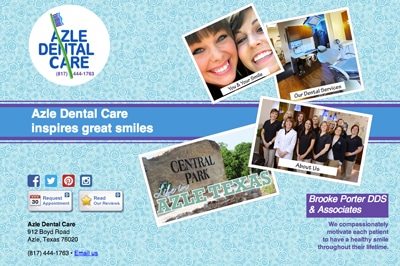
Azle Dental Care wanted to convey a fun, friendly, neighborly feel on their website for their dental practice. Visit the website for Azle Dental Care here.

Darlene Ellison branding

As a motivational speaker, Darlene Ellison needed a comprehensive branding for multiple audiences ­­— organizations and companies who want to hire speakers, individuals needing to hear her story, media helping to broadcast her message. She wanted a very…

Logo Lounge trends 2014

Logo Lounge reviewed almost 25,000 logos submitted to their website to come up with the top trends of 2014. What do you think of these? Does naming something a "trend" make you want to incorporate it…
Restoration Hardware 17-pound catalog series

Restoration Hardware Gives Print a Bad Name
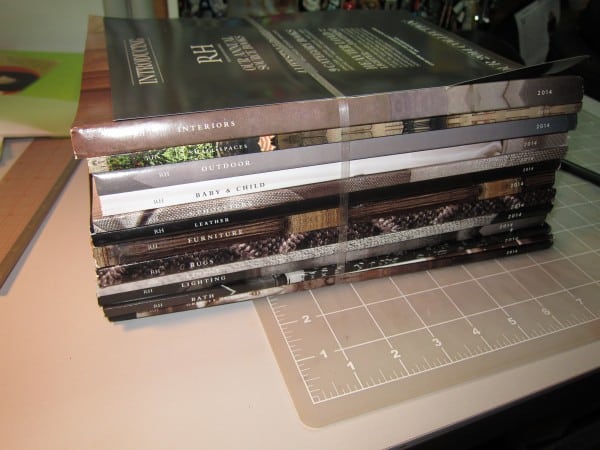
I just received a 17 POUND, 13-volume catalog from Restoration Hardware! Unsolicited, or course. Don't get me wrong - I love print and paper. But like anything, it can be used responsibly or irresponsibly. Funny…
Blue print and interior design tools

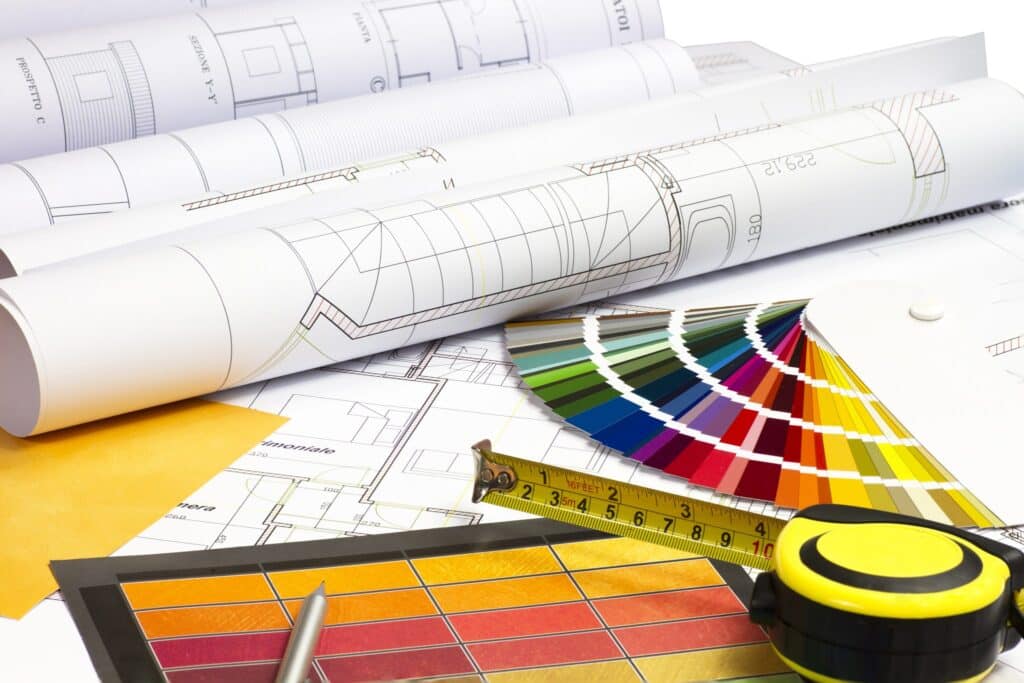
Everything I know about website design I learned getting my interior design degree.

 Well, not everything, but a really good foundation. Of course there are the obvious elements of any fine arts education – balance, rhythm, contrast, color theory, focus – what we learned in “Two-Dimensional Design 101.”…

Fun with Homonyms

Part of an eternal series. New content keeps showing up. This week I noticed several misspellings of compliment/complement. A quick note to clear the air. The confusion is the middle vowel. When someone says you…
Apple iPhone 6

We’re All Monday Morning Design Quarterbacks Now

I love how so much our Monday Morning Quarterbacking has become focused on design. There have been so many design articles this week after Apple presented the new iPhone 6 and 6 Plus and the…

Please sign up for our newsletter!

Our Work

See some samples of our work.

View Portfolio